





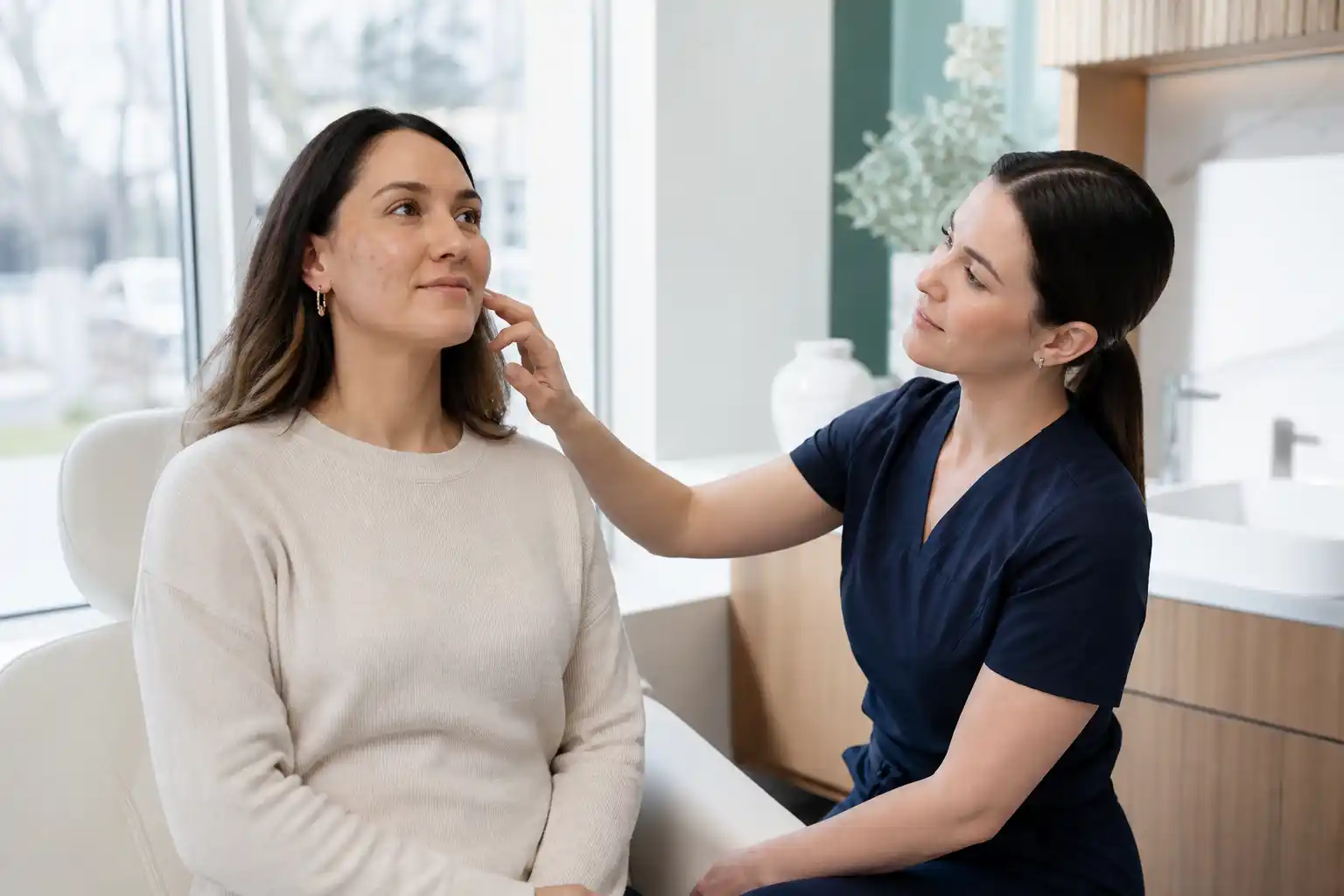
Acne may clear, but the scars it leaves behind can remain for years. Indented scars, uneven texture, and changes in skin tone can be difficult to improve with skincare alone, which is why many people explore professional treatments such as radiofrequency (RF) microneedling.
RF microneedling combines traditional microneedling with controlled radiofrequency energy to stimulate the skin’s natural repair response. Rather than simply treating the surface, the technology delivers energy at targeted depths beneath the skin, encouraging new collagen and elastin production.
For people considering RF microneedling for acne scars, understanding what the treatment can realistically accomplish – and what recovery looks like – is an important part of deciding whether it is the right option.
Acne may clear, but the scars it leaves behind can remain for years. Indented scars, uneven texture, and changes in skin tone can be difficult to improve with skincare alone, which is why many people explore professional treatments such as radiofrequency (RF) microneedling.
RF microneedling combines traditional microneedling with controlled radiofrequency energy to stimulate the skin’s natural repair response. Rather than simply treating the surface, the technology delivers energy at targeted depths beneath the skin, encouraging new collagen and elastin production.
For people considering RF microneedling for acne scars, understanding what the treatment can realistically accomplish – and what recovery looks like – is an important part of deciding whether it is the right option.
What To Expect From RF Microneedling For Acne Scars
RF microneedling devices use very fine needles to create controlled micro-injuries in the skin while delivering radiofrequency energy into targeted tissue. Depending on the device, the needles may be insulated or non-insulated. The combination of mechanical stimulation and controlled thermal energy triggers a healing response that promotes collagen and elastin remodelling.
This process can gradually improve skin texture and soften the appearance of certain acne scars. Research has found fractional RF microneedling to be a promising treatment for acne scarring, with the potential for meaningful improvement while maintaining a relatively manageable recovery period.
RF microneedling is not an overnight solution. Collagen remodelling takes time, and treatment is generally performed as a series rather than a single session. The exact number of treatments, treatment depth, and energy settings depend on the individual’s skin, scar characteristics, and the technology being used.
Learn more about radiofrequency microneedling outcomes here!
How RF Microneedling Improves Different Types Of Acne Scars
Acne scars are not all the same, which means treatment needs to be tailored to the type and severity of scarring:
Rolling scars create broad, shallow depressions that give the skin a wavy or uneven appearance. Because collagen remodelling can improve the structure beneath these depressions, rolling scars may respond well to RF microneedling.
Boxcar scars are wider depressions with more defined edges. RF microneedling may help soften their appearance and improve surrounding skin texture, although deeper scars may require a combination of treatments.
Ice-pick scars are narrow and extend more deeply into the skin. Selected ice-pick scars may improve with RF microneedling, but deeper scars can be more challenging and may respond better when RF microneedling is combined with other acne-scar treatments.
The goal should generally be improvement rather than complete scar removal. Results vary according to scar type, depth, age, and individual healing response. A professional assessment is therefore essential before creating a treatment plan.
Expected Results & Treatment Timeline
Most patients should expect results to develop gradually.
Some people notice that their skin looks smoother or more refreshed within the first few weeks, but the more meaningful changes occur as collagen production and remodelling continue beneath the surface. This process can continue for several months after treatment.
A series of approximately three or more sessions is commonly recommended, although the appropriate number varies. Sessions are usually spaced several weeks apart to allow the skin time to recover and begin its remodelling process.
Ready for a personalized acne-scar plan? Learn about Body Measure’s RF Microneedling service.
Immediately after treatment, temporary redness, swelling, warmth, sensitivity, and pinpoint marks are common. The skin may resemble a mild-to-moderate sunburn. These effects generally begin settling over the following days, although recovery varies depending on treatment intensity and individual skin response.
Aftercare plays an important role in supporting the healing process. Patients are typically advised to cleanse gently, keep the skin hydrated, and use broad-spectrum sunscreen as directed. Makeup, retinoids, exfoliating acids, and other potentially irritating active skincare ingredients may need to be temporarily avoided. Excessive heat, saunas, hot tubs, and strenuous exercise are also commonly restricted for a short period after treatment.
Always follow the specific aftercare instructions provided by your treatment professional rather than applying a one-size-fits-all recovery schedule.
Who Is A Good Candidate For RF Microneedling?
RF microneedling can be an option for many adults with acne scarring, but candidacy depends on more than simply having visible scars.
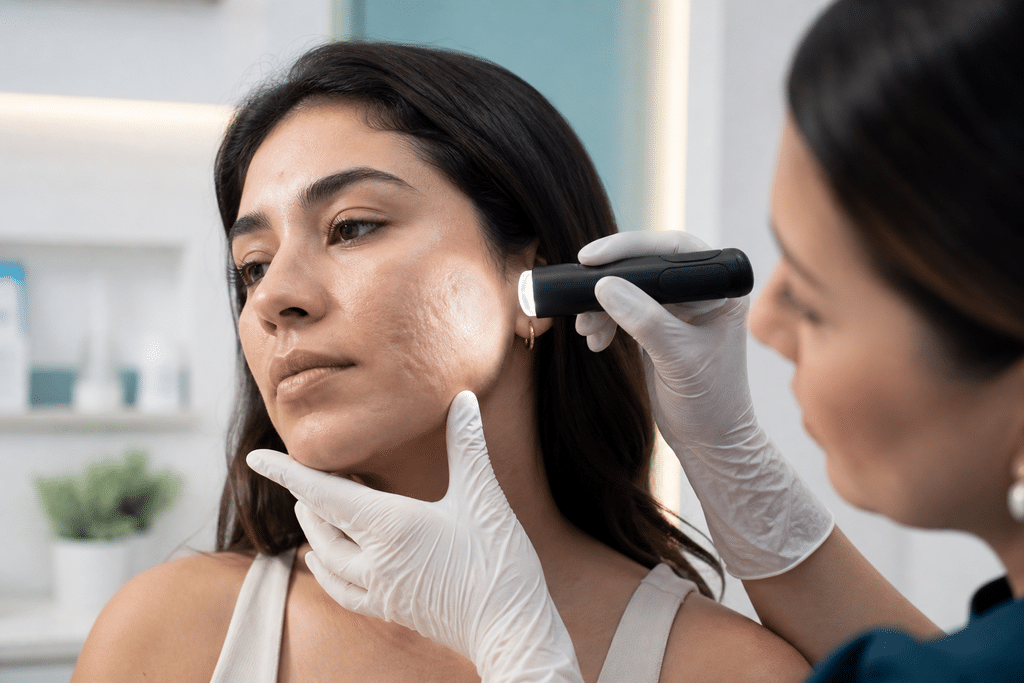
A qualified provider will typically evaluate the type, depth, and distribution of your scars, along with your overall skin condition. Someone with predominantly rolling or boxcar scars, for example, may require a different treatment approach from someone with deep ice-pick scars.
Active acne is another consideration. If you have inflamed or infected acne lesions in the treatment area, your provider may recommend controlling active breakouts before beginning RF microneedling.
Your consultation should also consider your skin tone, medical history, medications, and previous cosmetic treatments. Certain medications or health conditions that affect healing may influence whether treatment is appropriate. A history of abnormal or keloid scarring should also be discussed.
RF microneedling can be used across a range of skin tones, but treatment settings and technique still need to be individualized. Professional assessment is particularly important for reducing the risk of complications such as post-inflammatory pigmentation changes.
Treatment may also be postponed during pregnancy or when there is an active infection, open wound, significant skin irritation, or another contraindication in the intended treatment area.
Finally, expectations matter. RF microneedling is designed to improve scars and skin texture – not create perfectly poreless or completely scar-free skin. Patients who understand that improvement occurs gradually and may require multiple treatments are generally better prepared for the process.
Frequently Asked Questions About RF Microneedling For Acne Scars
How many RF microneedling sessions are needed for acne scars?
Many treatment plans involve a series of approximately three or more sessions, often spaced several weeks apart. However, there is no universal number that works for every patient.
Mild scarring may require fewer treatments than deeper or more extensive scarring. Device technology, treatment depth, RF energy settings, and whether RF microneedling is combined with another procedure can also affect the recommended treatment plan.
Your provider should assess your scars before recommending a specific number of sessions.
How soon will I see results after RF microneedling?
Initial improvements in skin texture may become noticeable within several weeks, but RF microneedling results are progressive.
The treatment works partly by stimulating the body’s collagen-remodelling process, which does not happen immediately. Improvements may continue developing for several months following a session or treatment series.
This means the appearance of your skin a week after treatment is not representative of your final result. Patience is an important part of the process.
Is RF microneedling painful?
Comfort varies from person to person and depends on factors such as the treatment depth, energy settings, and area being treated.
A topical numbing cream is commonly applied before the procedure to make treatment more comfortable. During RF microneedling, patients may notice pressure, warmth, prickling, or brief sensations as the device moves across the treatment area.
Some tenderness or sensitivity can also occur afterward. Your provider should discuss comfort measures and what sensations to expect before beginning treatment.
Considering treatment? Discover Body Measure’s personalized Exion RF Microneedling service.
Can RF microneedling completely remove acne scars?
No treatment can guarantee the complete removal of acne scars.
RF microneedling is intended to reduce the appearance of scars and improve overall skin texture through collagen remodelling. Some scars may respond significantly, while others – particularly deep or tethered scars – may require additional approaches.
Combination treatment can sometimes be appropriate because different types of acne scars respond to different techniques. A personalized assessment can help determine whether RF microneedling alone or a broader acne-scar treatment strategy is more suitable.
Read an RF microneedling acne scar study here.
What should I avoid after RF microneedling?
Your skin barrier needs time to recover after treatment, so protecting it during the early healing period is important.
Depending on your provider’s instructions, you may temporarily need to avoid makeup, retinoids, exfoliating acids, scrubs, and other potentially irritating skincare products. Direct or excessive sun exposure should be minimized, and appropriate broad-spectrum sun protection is especially important.
Strenuous exercise, swimming, saunas, steam rooms, hot tubs, and other sources of excessive heat or sweating may also need to be avoided during the initial recovery period.
Do not pick, scratch, or aggressively exfoliate peeling or textured skin. Instead, use gentle cleansing and hydration products recommended by your provider.
The length of these restrictions can vary depending on treatment depth, device settings, and your individual skin response, so always follow your personalized aftercare instructions.
Learn about the correlation between microneedling and hyaluronic acid production here.
Book Your RF Microneedling Today At Body Measure Inc.
If acne scars are affecting the texture and appearance of your skin, RF microneedling may be worth exploring. The best place to start is with a professional assessment that considers your scar type, skin characteristics, and individual goals.
At Body Measure Inc. in Winnipeg, our team provides personalized RF microneedling consultations and treatment planning with realistic guidance about expected results, downtime and aftercare.
Contact Body Measure Inc. today to schedule your consultation and learn whether our RF microneedling in Winnipeg is the right approach for your acne scars.

Melina holds a Master of Science in Community Health, and has devoted most of her career to helping older adults live a healthy and vibrant lifestyle. In her role as research coordinator, she saw firsthand how important it was for her clients to know and understand their unique body composition. Melina is a certified obesity counsellor with The World Obesity Association. She has personally lost 100 pounds, and is passionate with helping others reach their healthy weight.