




FibroScan in Winnipeg
Measure the Health of Your Liver
Are you at risk?
What is a FibroScan?
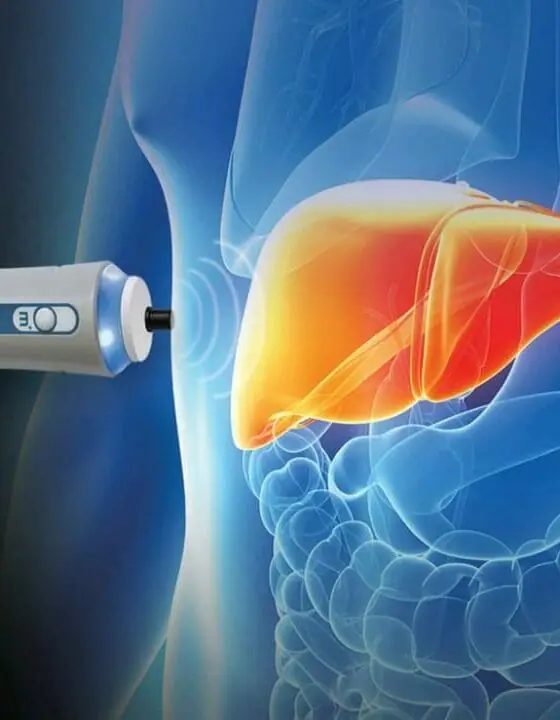
The FibroScan is a very specific, non-invasive scan designed to measure and identify a fatty liver. Using ultrasound waves, we will measure a 3 cm² area of your liver, calculating fat and liver stiffness to provide you with detailed information about your risk factors.
Why is Fatty Liver Important?
Did you know fatty liver affects more than 30% of North Americans?
When fat deposits in the liver, it causes inflammation, which can lead to scarring and fibrosis. Fatty Liver is when there is excess fat in more than 5% of liver cells. You might think of Fatty Liver as a problem caused by long-term alcohol consumption, but that’s only a small percentage of people who actually suffer from the disease.
The reality is we are facing an epidemic of Non-Alcoholic Fatty Liver Disease in North America. If you are carrying too much body fat, you may also have fatty liver.
What Causes Non-Alcoholic Fatty Liver (NAFLD)?
While Alcoholic Fatty Liver is a result of over-consumption of alcohol, NAFLD occurs when a person eats a high sugar, high carb diet loaded with bad fats (think fast food), usually eating too much and too often. This causes insulin to spike repeatedly, which results in the body reacting by storing fat internally.
When and Why to Consider a FibroScan
At Body Measure, we focus on your overall health and disease prevention. The FibroScan is a non-invasive technology that quickly scans and detects even minor scarring on the liver so you can start the appropriate treatment before liver disease has become too advanced. It can also rule out the need for further assessment such as a painful liver biopsy.
If you have excess body fat, now is the time to book your FibroScan. More sensitive than a traditional ultrasound, the FibroScan will let our team know not only if you have fatty liver and cell damage, but also the severity of your condition. That way, we can help you make adjustments to your diet, fitness, and lifestyle to improve your liver health. Even a 5-7% decrease in body weight can be associated with reduced liver fat and inflammation.
Pricing Bundles
Frequently Asked Questions
How long will the scan take?
What can I expect?
What happens after the scan?
How do I prepare?
Are there any risks associated with having a FibroScan?
How often should I get a liver scan?
How Does FibroScan Differ From A Regular Biopsy?
Traditionally, liver health was evaluated through liver biopsy, a procedure that involves inserting a needle into the liver to extract a tissue sample. While effective, biopsies are invasive, can be uncomfortable, and carry a small risk of complications such as bleeding or infection. They also require recovery time and are often associated with patient anxiety.
FibroScan provides a modern alternative. Unlike a biopsy, it does not require needles or sedation. Instead, it offers a quick, safe, and reliable way to evaluate liver stiffness and fat content using painless ultrasound-based technology.
What Does A FibroScan Test For?
FibroScan assesses two main aspects of liver health:
- Liver stiffness reflects the level of fibrosis or scarring.
- Liver fat, known as steatosis, is common in metabolic conditions like obesity and diabetes.
These measurements help physicians diagnose conditions like fatty liver disease, monitor disease progression, and evaluate treatment effectiveness.
What Does My FibroScan Score Mean?
Results are provided as two numerical values:
- Liver stiffness is measured in kilopascals (kPa). Higher values indicate more fibrosis.
- Controlled Attenuation Parameter (CAP) is measured in decibels per metre (dB/m), reflecting the degree of steatosis.
Your healthcare provider will interpret these results in the context of your overall health, lab results, and medical history to guide treatment decisions and lifestyle recommendations.