




Bone health is often associated with older age, but bone loss can begin well before age 65. For some adults, waiting until the traditional screening age may mean missing an opportunity to identify low bone density earlier.
A bone density scan can help assess bone strength and identify low bone mass or osteoporosis before a serious fracture occurs. While routine screening recommendations are largely based on age, earlier testing may be appropriate for adults who have certain medical, lifestyle, or medication-related risk factors.
Understanding when to consider testing can help you have a more informed conversation with your healthcare provider about your long-term bone health.
Bone Density Testing Before Age 65
There is an important difference between routine age-based screening and risk-based bone density testing.
Canadian guidance recommends considering bone mineral density (BMD) testing earlier when significant risk factors are present. Osteoporosis Canada’s 2023 guidance identifies adults aged 50 to 64 with a previous fracture or at least two clinical risk factors as candidates for BMD testing. Risk factors can include low body weight, smoking, heavy alcohol consumption, parental hip fracture, and certain medical conditions or medications. (Osteoporosis Canada)
Similarly, the U.S. Preventive Services Task Force (USPSTF) recommends osteoporosis screening for postmenopausal women younger than 65 who are determined to be at increased fracture risk through clinical risk assessment. (PubMed)
The important takeaway is that 65 is not a universal starting point for everyone. Your individual health history and fracture risk matter.
Risk Factors That May Justify Earlier Screening
Adults under 65 may want to discuss a bone density scan with their healthcare provider if they have risk factors associated with osteoporosis or fractures.
These can include:
- Premature or early menopause
- Low body weight or a low body mass index (BMI)
- A previous fragility or low-trauma fracture
- A parent who experienced a hip fracture
- Long-term corticosteroid use
- Certain hormone or endocrine disorders
- Medical conditions associated with secondary osteoporosis or poor nutrient absorption
- Rheumatoid arthritis
- Current or long-term smoking
- Heavy alcohol consumption
- Certain cancer treatments or medications associated with bone loss
For example, Osteoporosis Canada identifies glucocorticoid use for more than three months in the previous year, a BMI below 20, parental hip fracture, current smoking, heavy alcohol use, and conditions causing secondary osteoporosis among important clinical risk factors. (Osteoporosis Canada)
No single risk factor automatically means that you have osteoporosis. Instead, these factors help healthcare professionals determine whether earlier investigation may be worthwhile.
At Body Measure, we can help with nutrition and medical diagnostics and hormone testing for women and men.
What To Expect During A Bone Density Scan
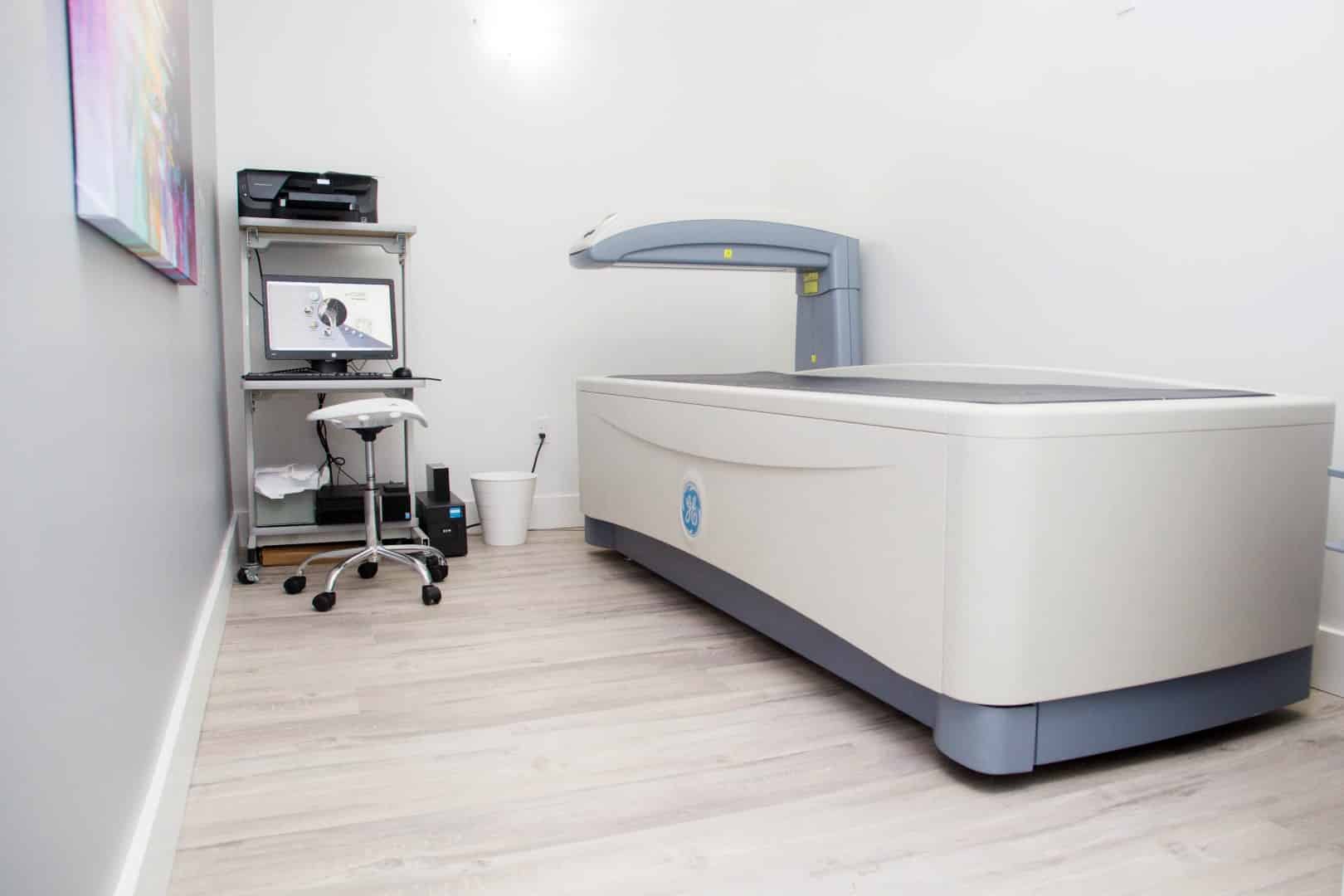
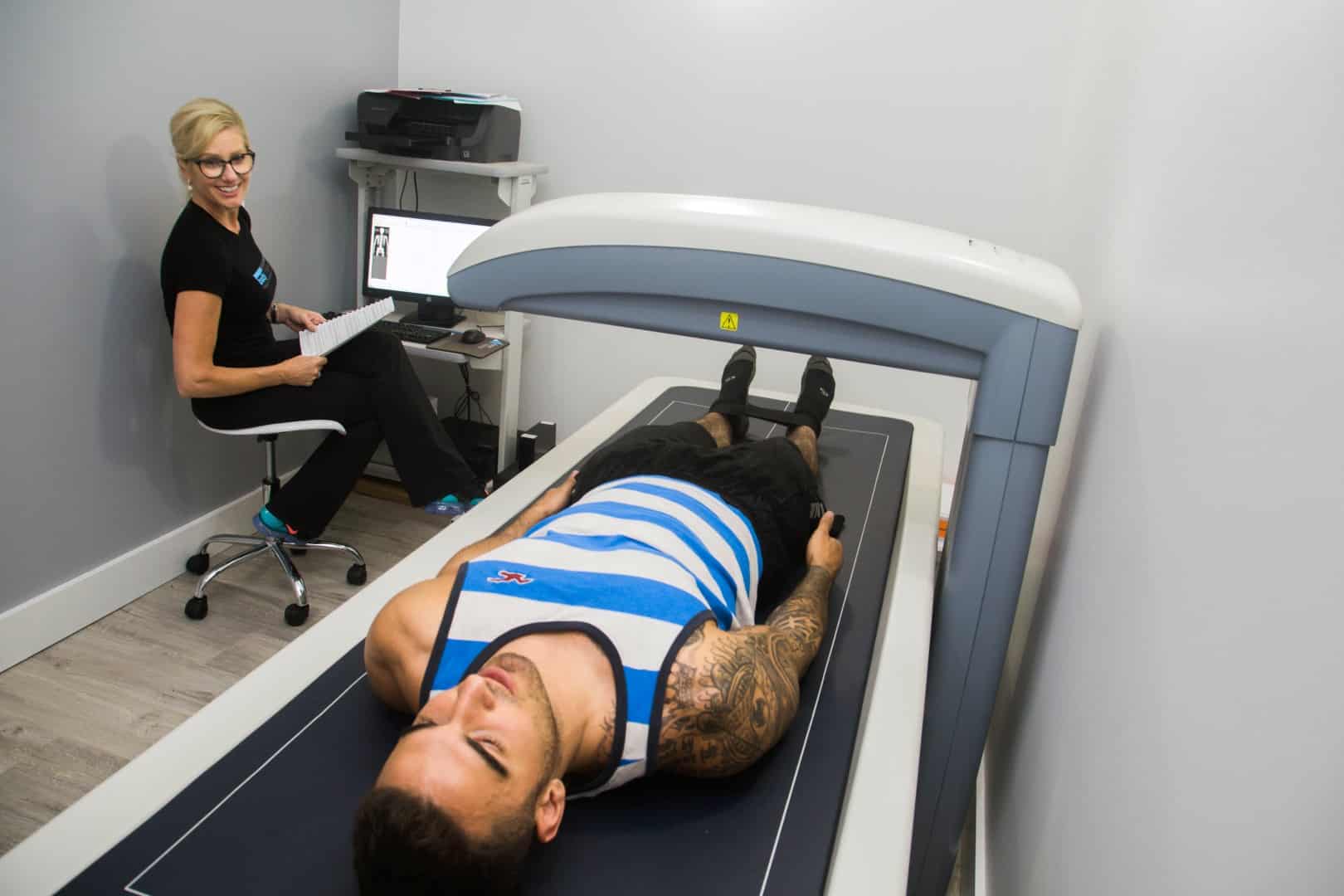
Bone mineral density is commonly measured using dual-energy X-ray absorptiometry (DXA or DEXA). The test uses low-dose X-rays to measure the mineral density of your bones. Osteoporosis Canada describes BMD testing as safe and painless, while MedlinePlus notes that DXA exposes patients to very low levels of radiation. (Osteoporosis Canada)
Preparation is generally simple. Depending on the facility, you may be asked to avoid calcium supplements for 24 to 48 hours before testing and to wear clothing without metal buttons, buckles, or zippers. (MedlinePlus)
The scan itself is non-invasive and generally takes only a short amount of time. You lie on a scanning table while the equipment takes measurements. There are no injections, and the test should not be painful.
Because bone density is only one part of overall fracture risk, your results should be interpreted alongside factors such as your age, medical history, medications and previous fractures. A qualified healthcare professional can help explain what your results mean for you and whether further assessment or treatment is appropriate.
Learn more here about scan indications and procedures and ask us about our DEXA and dietician package!
Frequently Asked Questions About Bone Density Scans
Is a bone density scan recommended after a fracture?
It may be. A fracture resulting from relatively minor trauma – such as a fall from standing height – can be an important warning sign of reduced bone strength. Fragility fractures are specifically recognized as an important osteoporosis risk factor. (USPSTF)
If you experience a low-impact fracture, particularly after age 40 or 50, speak with your healthcare provider about whether a bone health assessment is appropriate.
At Body Measure, we offer a comprehensive health assessment program.
Can medications increase the need for bone density testing?
Yes. Some medications can contribute to bone loss, making earlier or more frequent assessment appropriate for certain patients.
Long-term glucocorticoid or corticosteroid therapy is one of the best-known examples. Other medications, including some aromatase inhibitors and treatments affecting hormone levels, may also affect bone health. (USPSTF)
Never stop or change a prescribed medication because of concerns about bone density without speaking with the healthcare professional managing your treatment.
Should men under 65 consider a bone density scan?
Men can develop osteoporosis and experience fragility fractures, although recommendations for routine screening differ from those for women.
Choosing Wisely Canada suggests that younger adults, including men aged 50 to 69, may consider bone density testing when significant risk factors for bone loss are present. (Choosing Wisely Canada) The USPSTF, however, currently states that evidence is insufficient to determine the overall benefits and harms of routine osteoporosis screening in men. (USPSTF)
For men under 65, the decision is therefore best individualized based on medical history and fracture risk.
How often should bone density testing be repeated?
There is no single testing interval that is appropriate for everyone.
How frequently a scan should be repeated depends on factors such as your initial results, age, fracture risk, medical conditions, medication use, and whether you are receiving treatment for osteoporosis. Choosing Wisely Canada notes that a follow-up scan may be appropriate after several years depending on the initial findings. (Choosing Wisely Canada)
Your healthcare provider can recommend a testing schedule based on your individual circumstances rather than an arbitrary annual timeline.
Learn more here about bone density testing risk factors.
What do bone density scan results mean?
Bone density results may include T-scores and Z-scores.
A T-score compares bone density with that of a healthy young adult reference population. It is commonly used for postmenopausal women and men aged 50 and older. A T-score of -1.0 or higher is generally considered normal, between -1.0 and -2.5 indicates low bone density, and -2.5 or lower is consistent with osteoporosis in the appropriate clinical population. (MedlinePlus)
A Z-score compares your bone density with people of a similar age and sex and is often more relevant for premenopausal women and men younger than 50. (MedlinePlus)
These numbers should not be interpreted in isolation. Your healthcare provider can place your results in the context of your overall health and fracture risk.
Schedule A Bone Health Assessment With Body Measure Inc.
You do not necessarily need to wait until age 65 to start paying attention to your bone health. If you have risk factors for osteoporosis or simply have concerns about your bone strength, speak with your healthcare provider about whether bone density testing is appropriate for you.
Body Measure Inc. in Winnipeg offers professional bone density scanning and body composition services in a convenient, informative setting. Our team can provide detailed measurements to help you better understand your body and bone health.
Contact Body Measure Inc. to learn more about our bone health assessments and discuss your eligibility and results with your healthcare provider to determine the next steps that are right for you. We do DEXA scans in Winnipeg!

Melina holds a Master of Science in Community Health, and has devoted most of her career to helping older adults live a healthy and vibrant lifestyle. In her role as research coordinator, she saw firsthand how important it was for her clients to know and understand their unique body composition. Melina is a certified obesity counsellor with The World Obesity Association. She has personally lost 100 pounds, and is passionate with helping others reach their healthy weight.